

They say that you can never pay your mother back. This Mother’s Day, I got some letters in the mail that put that to the test - explanations of benefits, on insurance company letterhead, addressed to me.
The EOB will loudly state “THIS IS NOT A BILL”, but it doesn’t stop me from checking the line items. There’s no payer on file - the provider (my mom) had been working pro bono for thirty-nine years. I tallied the bill anyway, wondering if I could ever afford this!
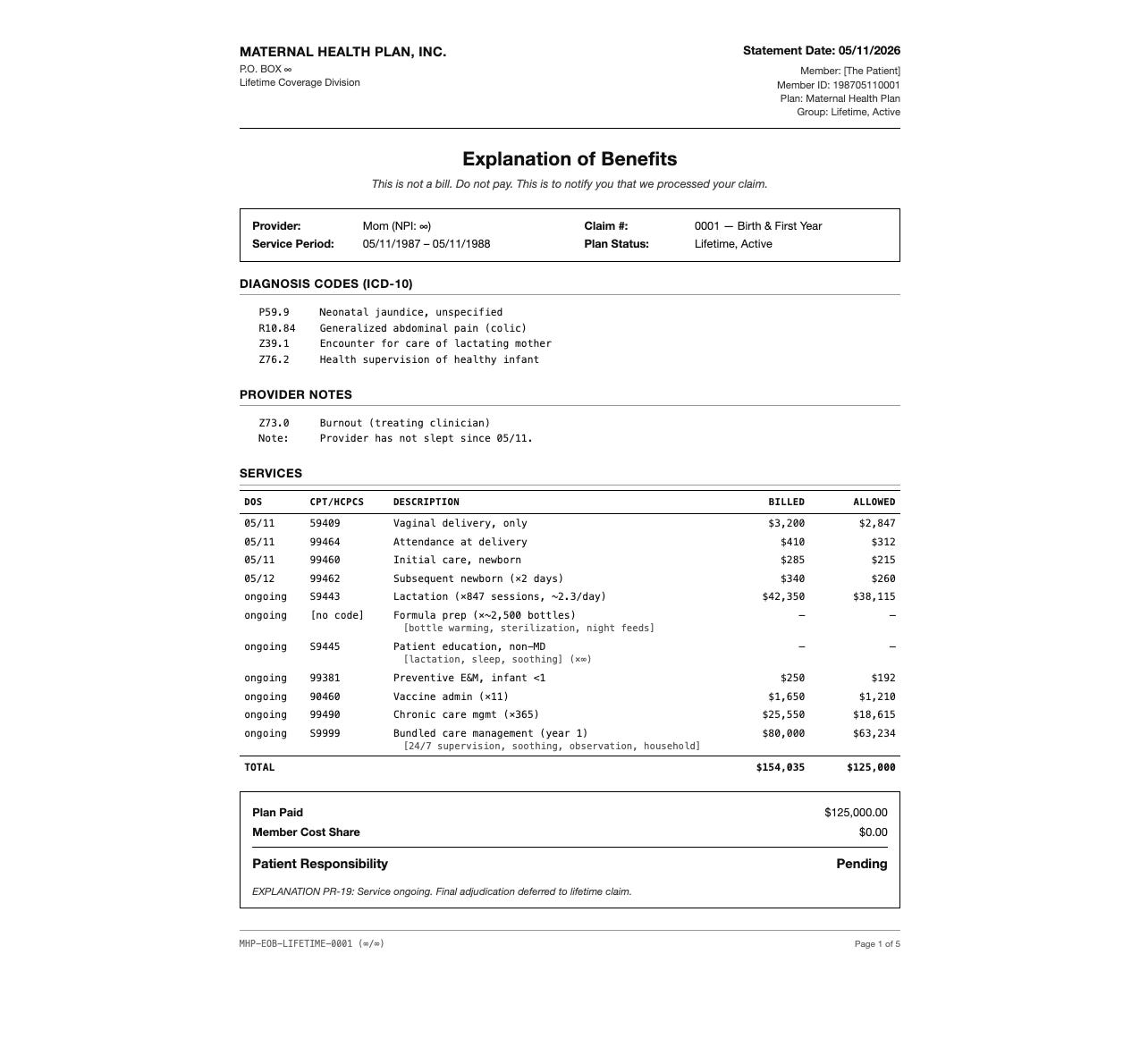
The first claim covered a service period of twelve months, not the delivery itself. Most people picture the bill ending at discharge: the bracelet on, the diapers packed, the pediatrician's number on a fridge magnet. But the claims extended through the year: 365 days of chronic care management, 847 lactation sessions, and a sleep deprivation entry that hadn't been closed out. The amounts only increased from there.
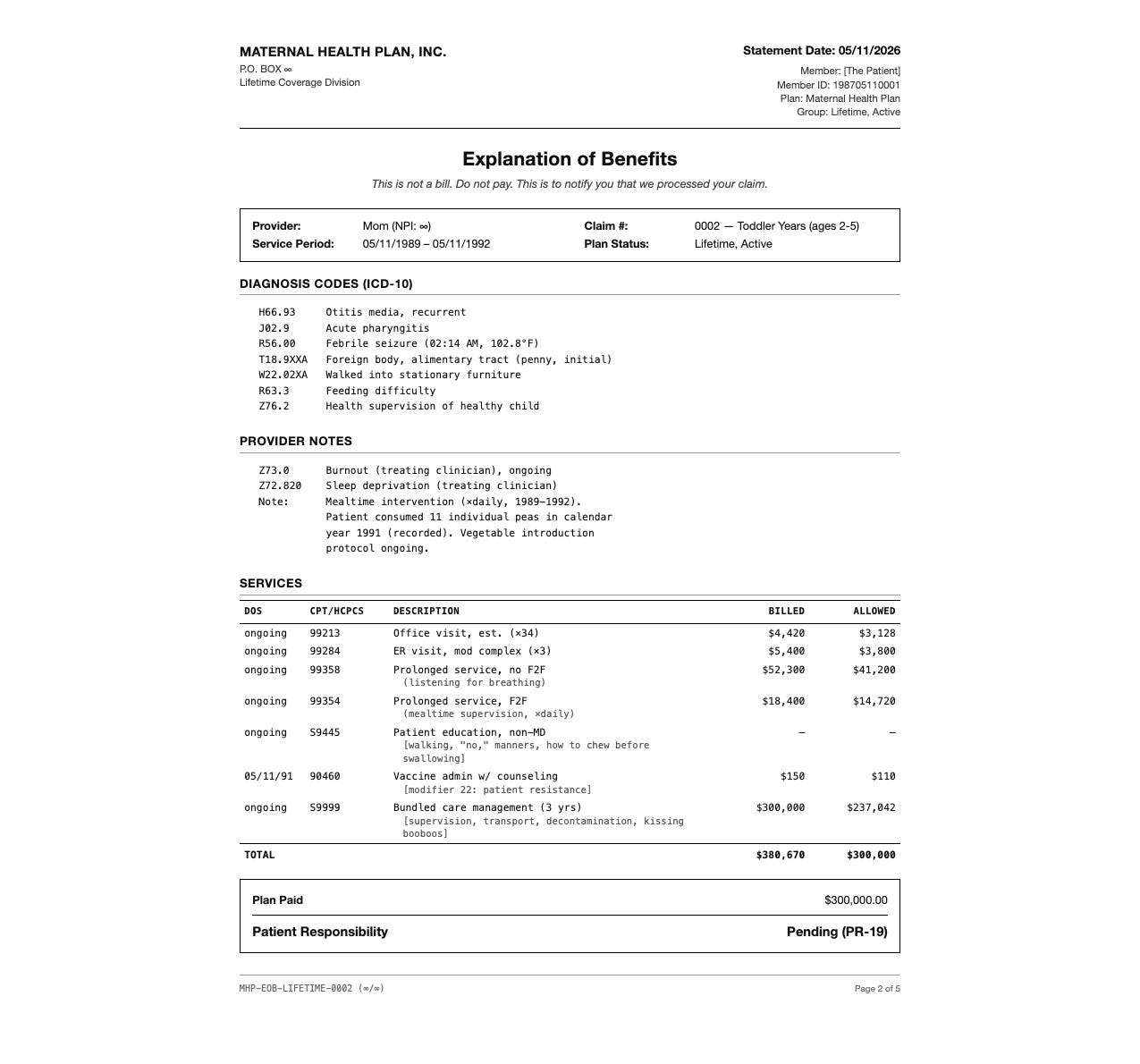
The next claim was over a three-year time period (please disregard timely filing requirements). The absurd codes ran from "Foreign body, alimentary tract" (T18.9XXA) to "Walked into stationary furniture" (W22.02XA) and the provider notes catalogued a vegetable introduction protocol that never finished… those green beans are a prescription that remains unfilled. Either way, the contracted rates would put me out of business.
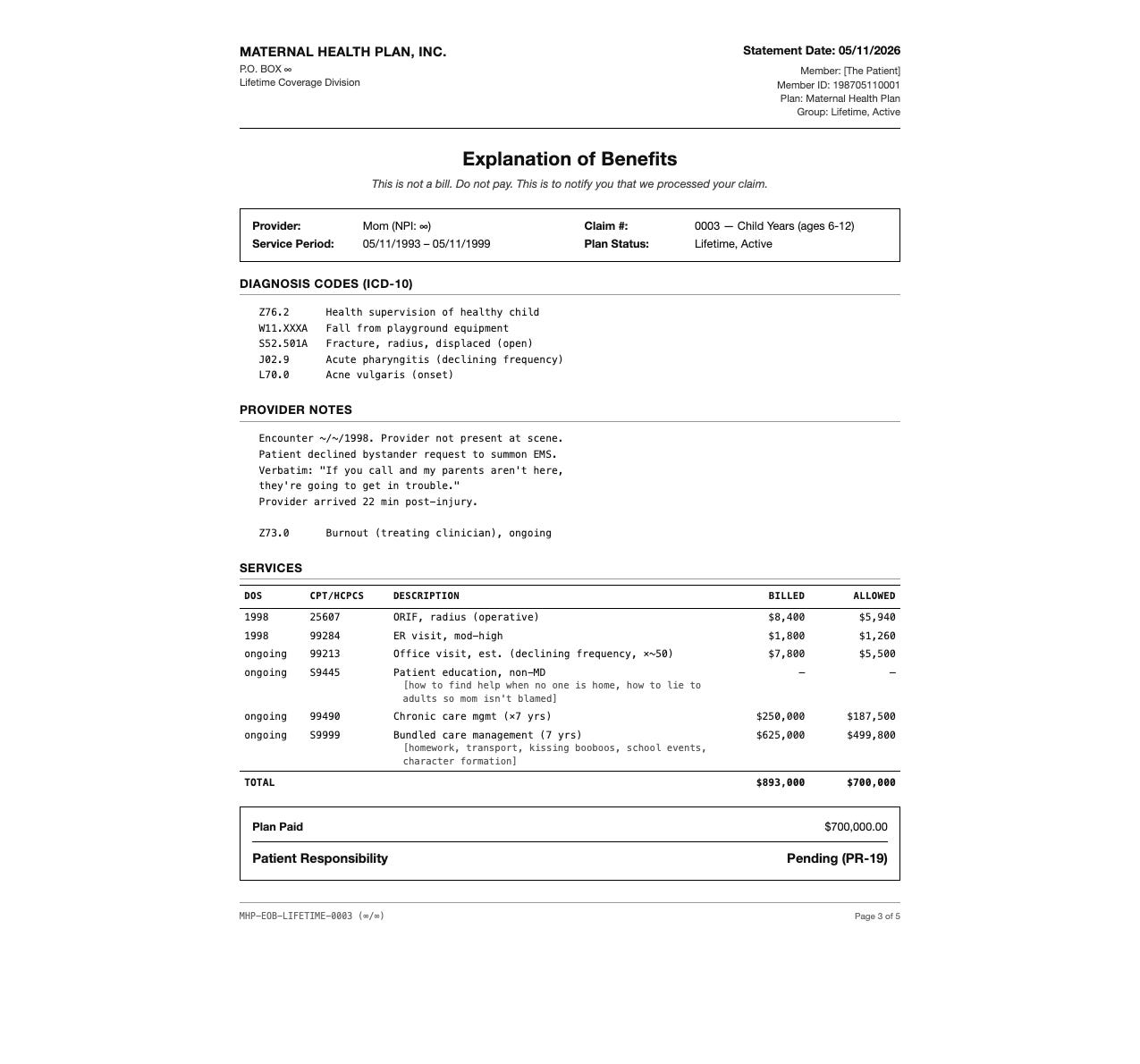
The healthcare system has a hundred codes for a broken arm — which bone, how badly, the operating room, the walking cast, the follow-up x-ray, the next x-ray after that. It does not have a code for what mom did at the hospital that afternoon. Then I turned thirteen, and the codes started routing through behavioral health.
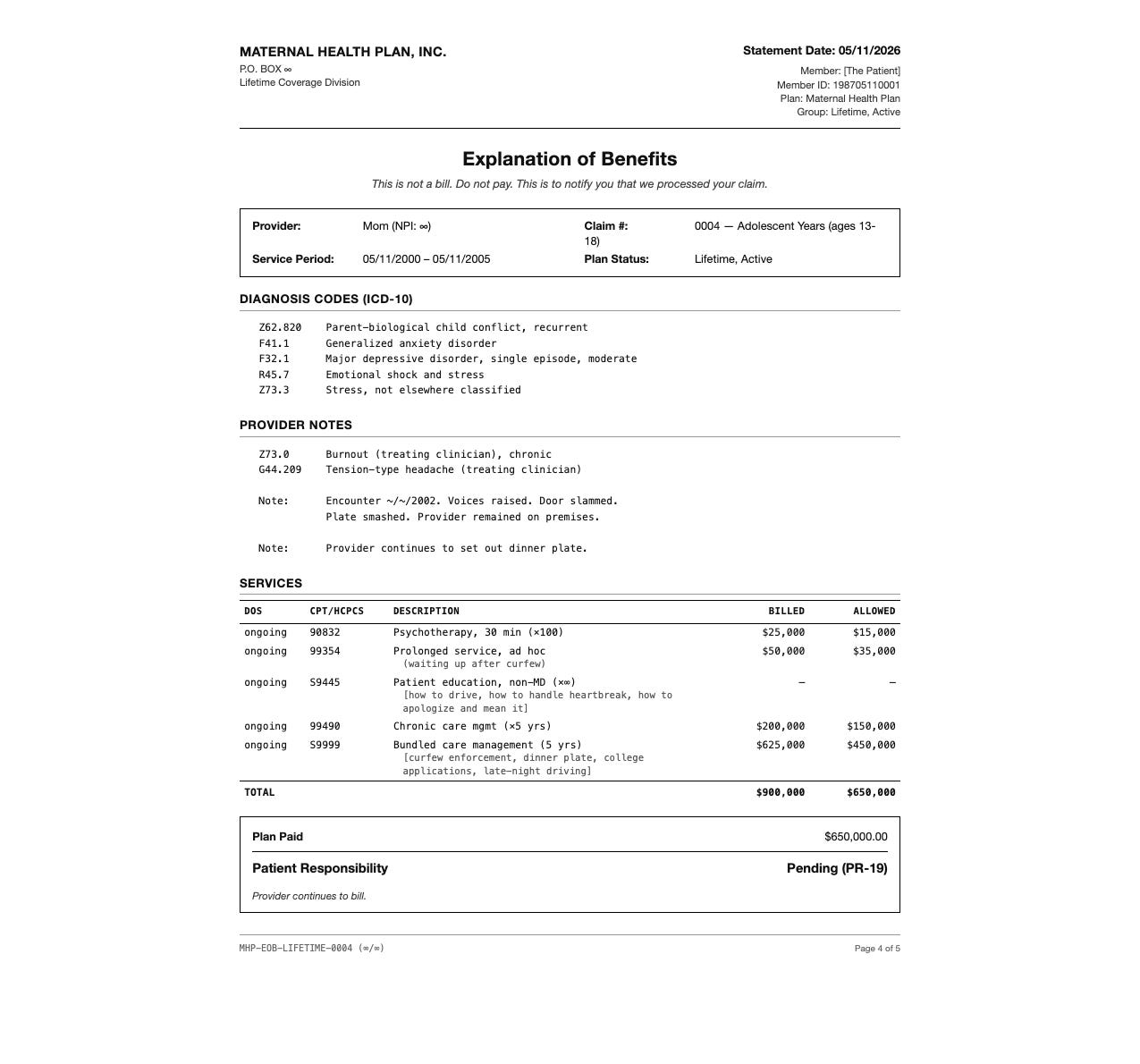
By the time I was eighteen, the dinner plate was a small detail in a longer list: tthe talking, the listening, the part where someone teaches you to stay in the room when something is hard. Then I left for college, and the provider continued to bill.
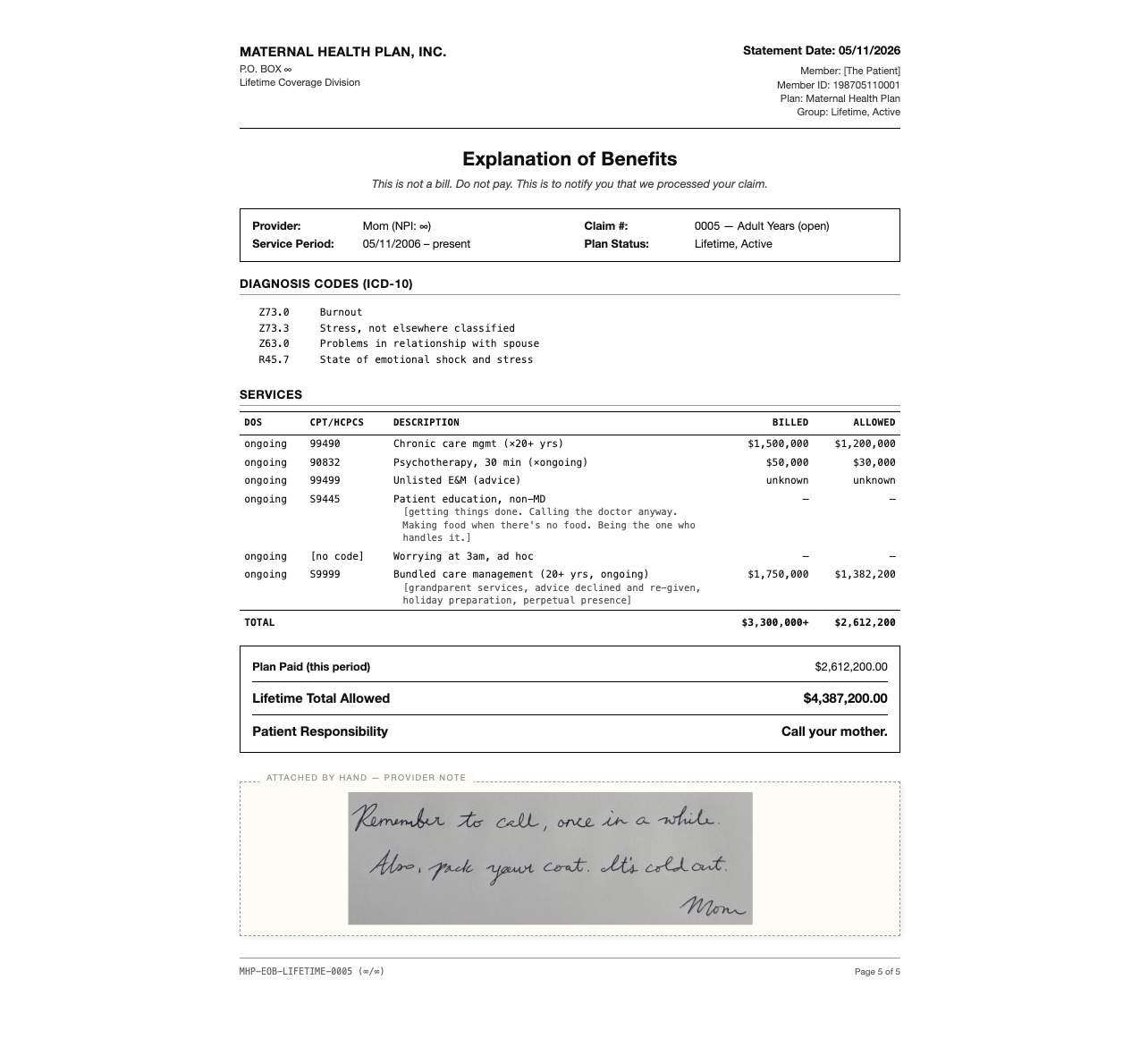
Because the lifetime claim doesn’t close, I don’t really get these in the mail anymore. The system can’t process a final invoice when the service period hasn’t ended. My mother is still the provider on file.
She is also a grandmother now. A new set of claims has opened on my own children, and the provider on that file is my wife - by my count, also working pro bono.
Mother’s Day was created to commemorate — but not compensate — the unpaid labor of motherhood. In 1987, it was also the day I was born (how about that).
The system can itemize, but it can't measure. There's no ICD-10 code for love, no CPT modifier for showing up. You can't put a price on this, and my mother never put one on what she was owed. But we can't expect our providers to behave like our mothers either.
Editor’s note: Anna Jarvis founded Mother’s Day in 1908. She spent the rest of her life fighting its commercialization; by 1943 she was committed to a sanitarium, and legend has it her medical bills were paid by the floral and greeting card industries she had spent decades opposing.
This day is also the anniversary of my first LinkedIn post, which brought me down this thought leadership journey (for lack of a better word). And while LinkedIn is incredibly frivolous as a business platform, it’s the place I started to find my voice as a writer, the place I started writing about how this all fits together - healthcare, money, the absurd accounting we do.
So, special thanks to those who have read my posts and followed along. Don’t forget to call your mom!
For visual reference, here are five real Explanations of Benefits - none as readable as my mother's: CMS sample, Cigna sample, Aetna sample, BCBS Illinois, UnitedHealthcare sample.